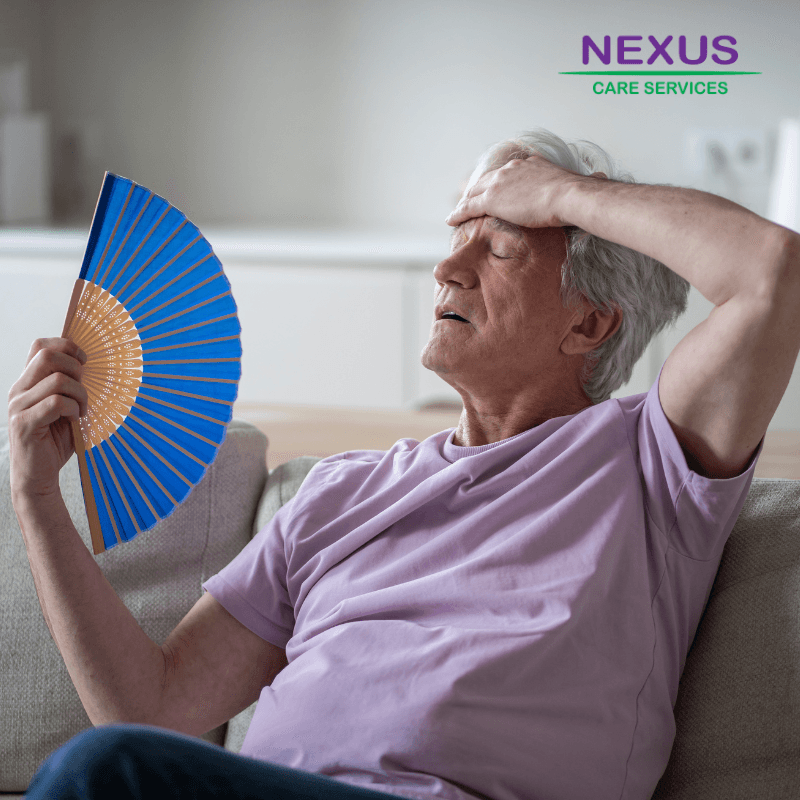

The UK is in the middle of a significant heatwave and the Met Office has issued a red warning – its highest level of alert.
This means that there is a risk to life for everyone, not just those considered vulnerable, as temperatures are expected to climb to 38°C with high levels of humidity both in the day and at night.
For older people, that combination of sustained heat and no overnight relief is particularly dangerous, especially if they have pre-existing health conditions.
Our experienced carers are already taking extra steps to protect the people we support, but if you have an elderly relative at home, here is what you need to know.
Why are older people more at risk from the heat?
The body’s ability to regulate temperature becomes less effective with age, which means that older adults are less likely to feel thirsty even when they are dehydrated.
Higher body temperatures can also affect how a person handles the effects of medication that they are used to using, which can make it harder for them to cool down quickly if they start to overheat.
Prolonged warmth can place strain on the body, even in healthy people. Every one of us will have felt drained and tired following a hot summer’s day, but repeated days of humid weather and poor sleep can lead to cumulative fatigue.
The combination of heat and humidity will be oppressive, which is why the Met Office has described it as an impactful severe weather event.
The UK Health Security Agency has warned that sustained periods of warm weather can result in serious health outcomes, especially for older adults and is urging people to look out for elderly relatives, neighbours and those with underlying health conditions.
Practical tips for keeping elderly people safe at home
Of course, the best form of treatment is prevention, so there are steps that you can take that will help keep the people you love safe:
- Watch for changes in behaviour – Confusion and unusual drowsiness in an older person during a heatwave should be taken seriously. It can be an early sign of heatstroke.
- Keep the home as cool as possible – Keep your home cool by closing windows and curtains in rooms that face the sun and open windows on the shaded side of the house in the early morning and late evening when the outside air is cooler.
- Prioritise hydration – Older people often do not feel thirsty until they are already dehydrated. Encourage regular sips of water throughout the day rather than waiting until they ask. If they struggle with drinking lots of cool drinks, break out the ice lollies or give them food with a higher water content, such as melon or cucumber.
- Stay inside during the hottest part of the day – While the urge may be to top up the tan during the good weather, it is strongly advised that you keep out of the sun at the hottest time of the day, between 11am and 3pm. If someone needs to go outside, make it early morning or early evening and then make sure they cover up, seek the shade and apply sunscreen regularly.
- Check on them regularly – During a red warning, daily check-ins are not enough. If you have an elderly relative living alone, visit or call at least twice a day. Ask specifically how they are feeling, not just whether they are managing.
- Be mindful of overnight recovery – Tropical nights make it very hard for people to recover from the daytime heat, exacerbating the heat stress impacts. A fan in the bedroom, cool bedding and a lukewarm shower (do not take cold showers) before bed can all help.
- Review medications – Some medications, including diuretics, certain blood pressure drugs and antihistamines, can increase sensitivity to heat or affect hydration. If you are unsure whether someone’s medication is a concern in this weather, speak to their GP or pharmacist.
If someone is showing signs of heatstroke, including hot and dry skin, rapid breathing, confusion or loss of consciousness, call 999 immediately. This is a medical emergency.
For concerns that are less urgent, contact the person’s GP or call NHS 111 for advice.
How Nexus Care Services can help
We appreciate that taking these extra steps can place additional pressure on a person’s care needs.
Our award-winning home care teams across Sutton Coldfield, Tamworth, Lichfield and the wider West Midlands are already keeping a close eye on everyone we support during this period.
However, if you feel that you could do with additional support during the summer or throughout the year, we are happy to help.
Our quick care assessments can be conducted within 24-48 hours and we aim to start delivering care within 3-5 days of your enquiry.
If you are looking for support for a relative at home and would like to talk through what care might look like, give us a call.